
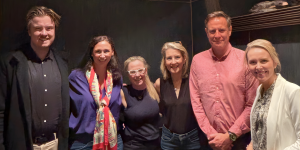
Our recent breakfast with Prof. Amy Edmondson was an immense privilege and undoubtedly one of my 2025 highlights. Despite her global stature, Amy was disarmingly natural and genuinely curious. Within minutes, it was clear this was not going to be a typical leadership discussion. She brought a rare combination of humility and incisiveness to the conversation.
We shared with Amy some of the cultural dynamics and leadership challenges we observe in our work. Amy responded with thought-provoking insights and models that provided instant clarity. One of the most powerful ideas she offered was this: workplace conversations are not like dinner party conversations. Leaders have a responsibility to be candid, direct and constructive. Not for the sake of bluntness, but for the benefit of the organisation.
Amy spoke about the need to reframe how we talk about psychological safety. She shared that her recent Harvard Business Review article was long overdue in clarifying that psychological safety should not be seen as comfort or consensus. Unfortunately, the concept has often been misrepresented or oversimplified. The main drivers behind a culture of psychological safety are organisational performance, candid conversations and robust decision-making processes. She suggests reframing development programs so they firmly position psychological safety as a core business lever instead of a cultural ‘nice-to have’.
To enable candid and effective leadership conversations, Amy highlighted three key enablers:
- Mental agility – the ability to challenge our own assumptions and remain open in the face of discomfort.
- A practical toolkit – structured ways to approach difficult conversations, so leaders are not relying on instinct alone.
- Relational depth – cultivating genuine relationships with colleagues to enable empathy for others’ perspectives, trust and to withstand moments of tension.
Regarding the need for relational depth, we explored the distinction between task conflict and relational conflict. Amy offered a striking perspective “you can’t truly have task conflict without some level of relational tension. People don’t enjoy being contradicted. To navigate this, leaders must develop strong relationships that can hold the weight of disagreement without fracturing.” The difference between high trust and group-think can be confusing at times. But the most agile leaders know they need to foster depth in their relationships to understand and respect their colleagues’ personal drivers. In times of robust conflict, this knowledge enables a healthy debate with the best possible outcome for the organisation.
One of the most resonant parts of our conversation was Amy’s articulation of the three pillars of organisational performance:
- Strategic clarity and direction
- Operational enablement through people and processes
- A culture of candour and agility
She warned that when one of these pillars weakens, the whole structure falters. As consultants, we often see organisations over-invest in one pillar while overlooking the others. Amy’s reminder was clear: sustainable performance requires strength in all three. Gone are the days where specialisation in one pillar was sufficient. It is this multidimensional fluency that we aim to cultivate in all of our leadership development work at Serendis.
There was also a beautifully simple but profound idea she introduced regarding your “shadow of the future” as a leader. If you dismiss what seems like a mediocre idea today, you may inadvertently prevent a brilliant idea from being shared tomorrow. This concept deepens our understanding of psychological safety, not just as a present-day condition but as an investment in future innovation.
As we wrapped up our conversation, we left feeling energised and deeply affirmed in our purpose.
For those of us working to shape more candid, adaptive and high-performing workplaces, the breakfast served as a meaningful reminder: language matters, structure matters, and relationships matter. The future of leadership belongs to those willing to challenge themselves and foster the kind of candour that propels organisations forward.
And sometimes, it all begins with a good conversation over breakfast.